
Rising logistics costs, pressure to deliver quickly, and ever-increasing customer expectations are forcing e-commerce businesses to consider how to use their warehouse space more efficiently. Traditional models, however, often result in companies paying for space they don’t actually use.
As a result, the concept of volumetric warehousing is increasingly coming to the forefront… an approach that views a warehouse not in terms of the number of pallets stored, but in terms of the actual space the goods occupy within it. It is precisely this flexibility that is one of the reasons why volumetric warehousing is appearing more and more frequently in fulfillment service offerings.
What is volumetric storage
Volumetric storage is based on a simple principle: instead of paying for a fixed space in the warehouse, you pay for the actual volume of goods that the items occupy.
Unlike the traditional approach, where capacity is often defined by the number of pallet or shelf positions, the volumetric method uses exact volume (for example, in m³) and is thus able to reflect the reality of the warehouse much more accurately. Every product and every box has its own dimensions, and the system actively accounts for them. The result is a model that is both more accurate and more cost-effective.
How it works in practice
To understand how volumetric storage affects logistics costs, it’s helpful to look at it over time. You rarely keep the same amount of goods in your warehouse at all times – inventory is constantly being received and shipped out.
Imagine an e-commerce store that stocks a larger volume of goods at the beginning of the month in anticipation of the upcoming season. Gradually, however, orders are shipped out, the warehouse “empties out,” and the total inventory level decreases. In the traditional model, unless the inventory in the allocated storage spaces is completely sold out, you would pay for approximately the same amount of capacity.
With volumetric storage, the actual volume is tracked over time (typically on a daily basis), and at the end of the period, an average is calculated from this data, which is then factored into the final storage price. As a result, the costs more accurately reflect your actual use of the warehouse. The more goods you store, the more you pay. If inventory levels decline, this is reflected positively in the price (typically during the off-season or after peak sales periods). The model thus responds flexibly to changes in your business without the need to address requirements for consolidation or other warehouse operations designed to reduce costs.
What does this mean for an online store
From an e-commerce perspective, volumetric warehousing isn’t just a different way of calculating prices. In fact, it changes the approach to inventory management and cost control. You don’t pay for reserved capacity, but for the actual volume of goods you have in the warehouse. Simply put: As inventory volume decreases, so do storage costs.
This model naturally guides you toward more effective management:
- you’re better at managing inventory turnover,
- are you considering the size of your inventory,
- you optimize your product mix.
Every cubic meter has its own value, which influences decision-making. The same applies to specific types of products – for example, goods with a limited shelf life, where it is necessary not only to optimize inventory but also to manage it properly over time.
When volumetrics (doesn’t) pay off
Volumetric storage isn’t a one-size-fits-all solution. It’s most beneficial when the volume of your inventory fluctuates significantly over time.
Typically, these are online stores that:
- operate on a seasonal basis (e.g., Christmas, summer season, etc.),
- are growing and gradually increasing their inventory,
- have variable inventory turnover,
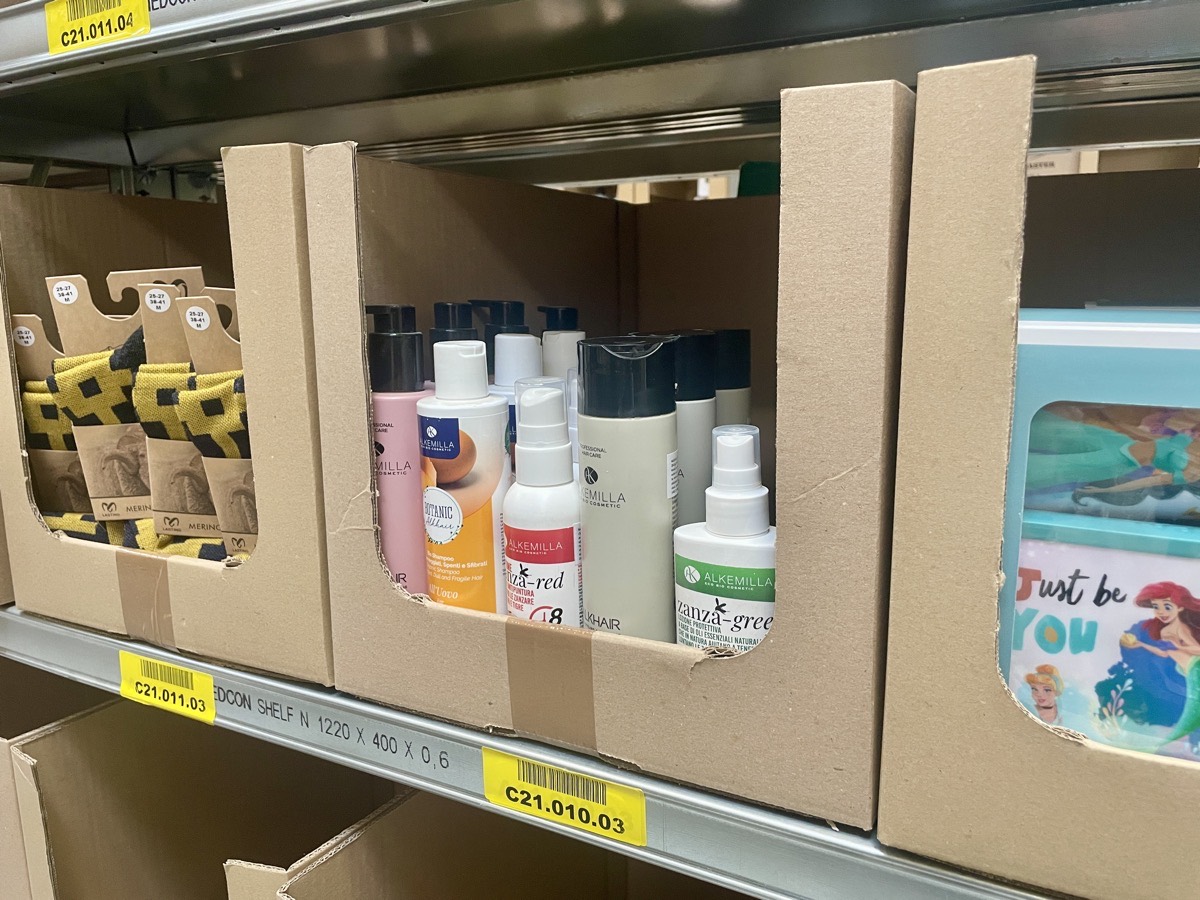
- offer a range of products in various sizes and volumes.
Conversely, for stable inventories with minimal fluctuations, the difference may not be as significant. If you maintain a similar quantity of goods in the same volume over the long term, the traditional model may be sufficient. The key factor, therefore, is variability – the more your inventory fluctuates over time, the greater the benefits of volumetric inventory management.
How does fulfillment fit into this
Fulfillment deals with fluctuating inventory levels, seasonality, and the growth of e-commerce stores. Inventory levels change constantly, orders come in waves, and warehouse demands evolve. In such an environment, flexibility is key.
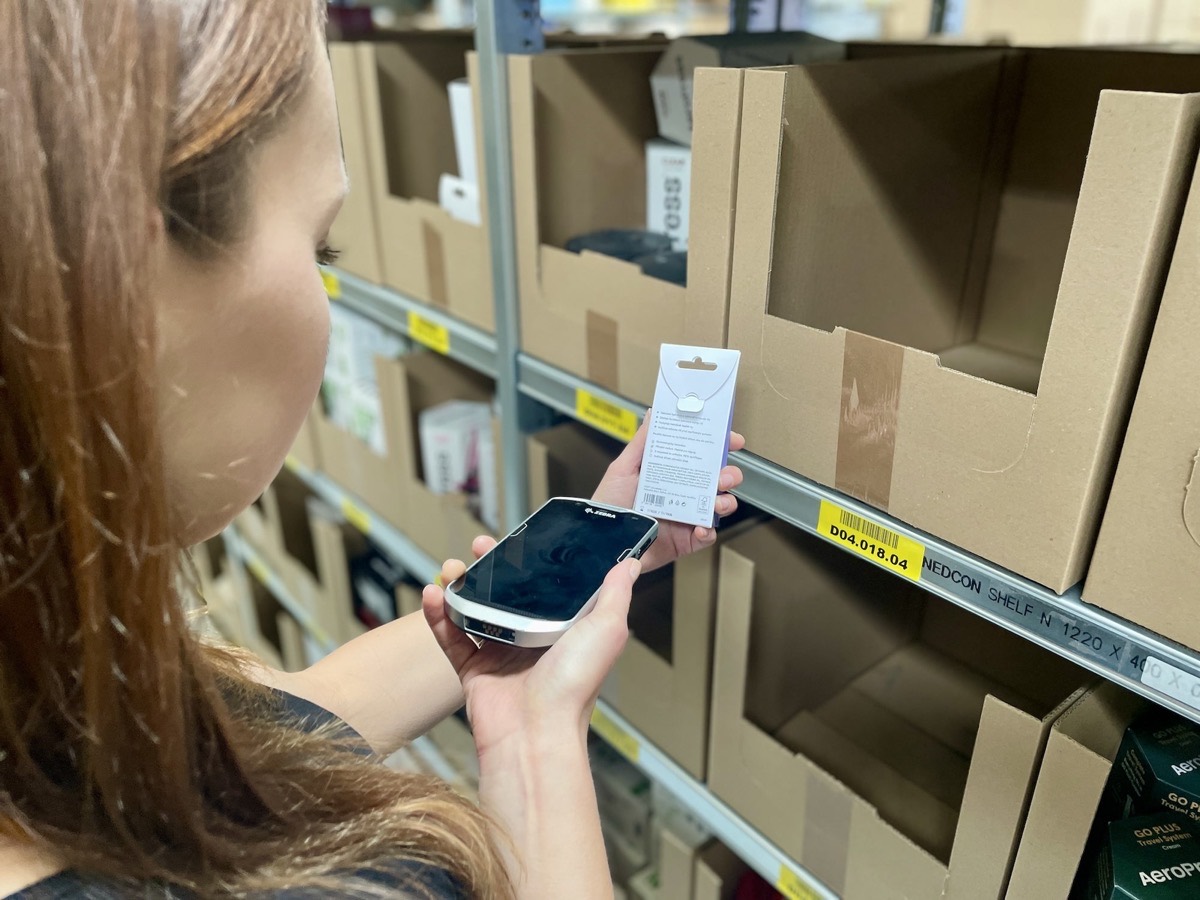
Volumetric warehousing thus fits into the broader logic of fulfillment: you pay exactly for what you actually use – whether it’s space or processed orders. Accurate data on products, their dimensions, and their movement within the warehouse also play an important role here. It is precisely this high-quality data that helps you better understand how warehouse space is being used and respond to changing storage needs.
Summary: More efficient storage without unnecessary costs
Volumetric warehousing provides a simpler and more accurate view of how much your warehouse actually costs you. Instead of fixed capacities, it works with the actual volume of goods and adapts to how your inventory changes over time.
As a result, it helps ensure more precise cost management, more efficient use of space, and more natural responses to growth and seasonal fluctuations. And that is precisely why it is becoming the standard in modern fulfillment.