MultiSKU storage: Efficiently managed warehouse space

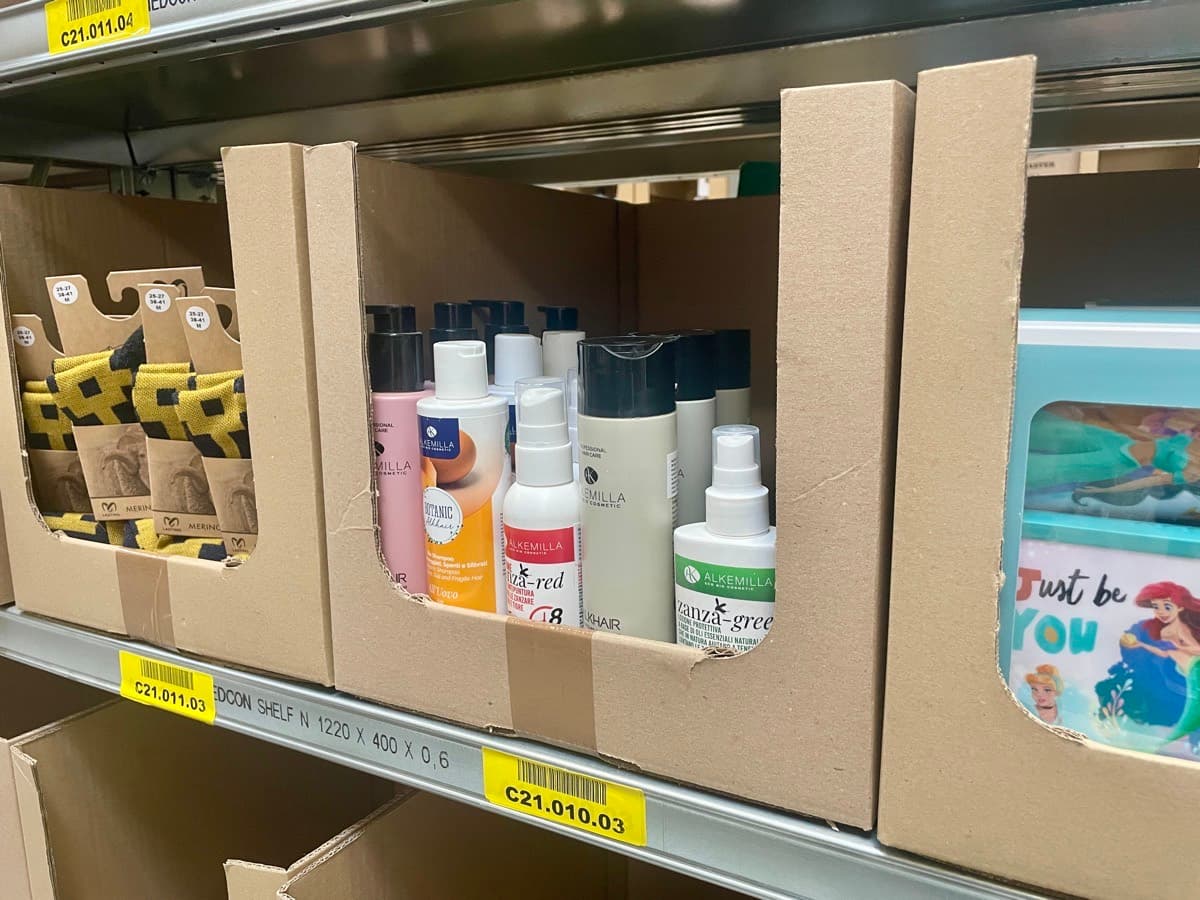
The efficient use of storage space is one of the key factors in a well-run warehouse. It is not just a question of how many shelves or square meters are available, but above all of how the available space is utilised.
One way to utilise warehouse capacity more efficiently is to store several different products (SKUs) in a single storage position, a practice known as multiSKU storage. This approach allows for better utilisation of available capacity; however, it is not suitable for every type of goods and places greater demands on the accuracy of the system’s records.
What exactly does multiSKU warehousing mean, when does it make sense, and what needs to be put in place to ensure everything runs smoothly?
What does ‘multiSKU’ mean?
Before we look at exactly what ‘multiSKU’ means, let’s first recap the basic concept on which this term is based. An SKU (Stock Keeping Unit) is a unique identifier for an item in stock, which enables a product to be clearly recorded and distinguished from other items.
It is precisely from the term ‘SKU’ that we move on to the term ‘multiSKU’. Whilst an SKU refers to a single specific product, a multiSKU describes a situation where there are several different products within a single stock position.
Example:
Let’s imagine, for example, a single shelf position on which the following items are stored:
- 20 red T-shirts in size M;
- 15 blue T-shirts in size M;
- 10 black T-shirts in size M.
Storing these three items in a single stock position creates what is known as a multiSKU position.
It is not, therefore, simply a question of quantity in a single stock position. The key point is that a single stock position accommodates several different SKUs.
When does multiSKU make sense?
The multiSKU option can be an effective way of making better use of available warehouse space. Not every SKU takes up enough space to warrant a dedicated storage location. If we were to allocate a separate location to each SKU, some of the space might remain unused.
By storing multiple SKUs in a single bin, it is therefore possible to make better use of its capacity and reduce the amount of space required. This may be particularly suitable for a wide product range with a large number of different SKUs.
MultiSKU is useful, for example, for:
- small items that take up only part of a stock position;
- products with low or irregular stock levels;
- a wide range of products, where a separate shelf position for each SKU would result in a large amount of unused space;
- seasonal goods, for which stock levels fluctuate significantly throughout the year.
The key is to find the right balance between the use of warehouse space and the efficiency of goods handling. This is precisely why multiSKU is not automatically suitable for all types of products.
When is the multiSKU storage option not worthwhile?
Making better use of warehouse space through multiSKU storage is not always the most efficient solution. Particularly when it comes to subsequent warehouse handling, it may be more advantageous for some products to allocate a separate storage location to each SKU.
Typically, these are fast-moving goods that are frequently handled, or products of which there are so many in stock that they fill an entire position. In such cases, a separate location can simplify and speed up the picking process.
Caution is also advised with products that are similar and therefore easily confused, or that have different storage requirements – for example, in terms of temperature, humidity or other conditions. In such cases, the goods must be stored in an environment that meets their specific requirements, regardless of the potential savings in storage space.
There is therefore no single universal rule that tells us whether an SKU should be stored separately or, conversely, alongside other items. Choosing the appropriate storage method depends primarily on the nature of the goods, their turnover, stock levels and the method of handling.
What is key to multiSKU warehousing?
If a single stock position contains several different SKUs, it is essential to have an accurate overview of what is stored at that location and in what quantities. Without reliable records, multiSKU storage can, on the contrary, lead to unnecessary errors and complications when handling goods within the supply chain.
The key, therefore, is a properly configured WMS (Warehouse Management System), which must know exactly:
- which SKU is located in that position;
- how many units of each SKU are stored at that location;
- what the capacity of that location is;
- where additional stock can be placed;
- where warehouse staff should collect a specific product from when picking.
MultiSKU is therefore not simply a matter of physically placing multiple products on a single shelf. For this storage method to work effectively, it must be supported by accurate record-keeping, unambiguous identification of goods and properly configured warehouse processes.
An efficient warehouse isn’t just about space
MultiSKU demonstrates that warehouse efficiency is not simply a question of how many shelves or square meters we have available. Equally important is how we utilise the available space and how we are able to manage (systematically) the stock stored there.
Properly configured multiSKU warehousing can be helpful in a number of scenarios. However, it is not a one-size-fits-all solution for every type of goods – there are always several variables to take into account.
It is precisely the combination of efficient use of space, accurate record-keeping and well-organised warehouse processes that enables us to strike the right balance between maximising warehouse capacity and efficient order picking.