In logistics, not every shipment has to wait to be put into storage and for a subsequent order after it is received at the warehouse. Thanks to cross-docking, goods can be forwarded almost immediately to the next customer, without the need for long-term storage
This approach helps speed up distribution, reduce the handling of goods, and make better use of warehouse capacity. How does cross-docking work, what benefits does it offer, and when is it worth using?
What is cross-docking?
Cross-docking is a logistics method in which goods, upon arrival at a warehouse, are not stored in regular inventory locations but are instead routed for immediate shipment. Rather than being stored long-term, they remain in the warehouse only for as long as absolutely necessary (usually for a matter of hours to a few days).
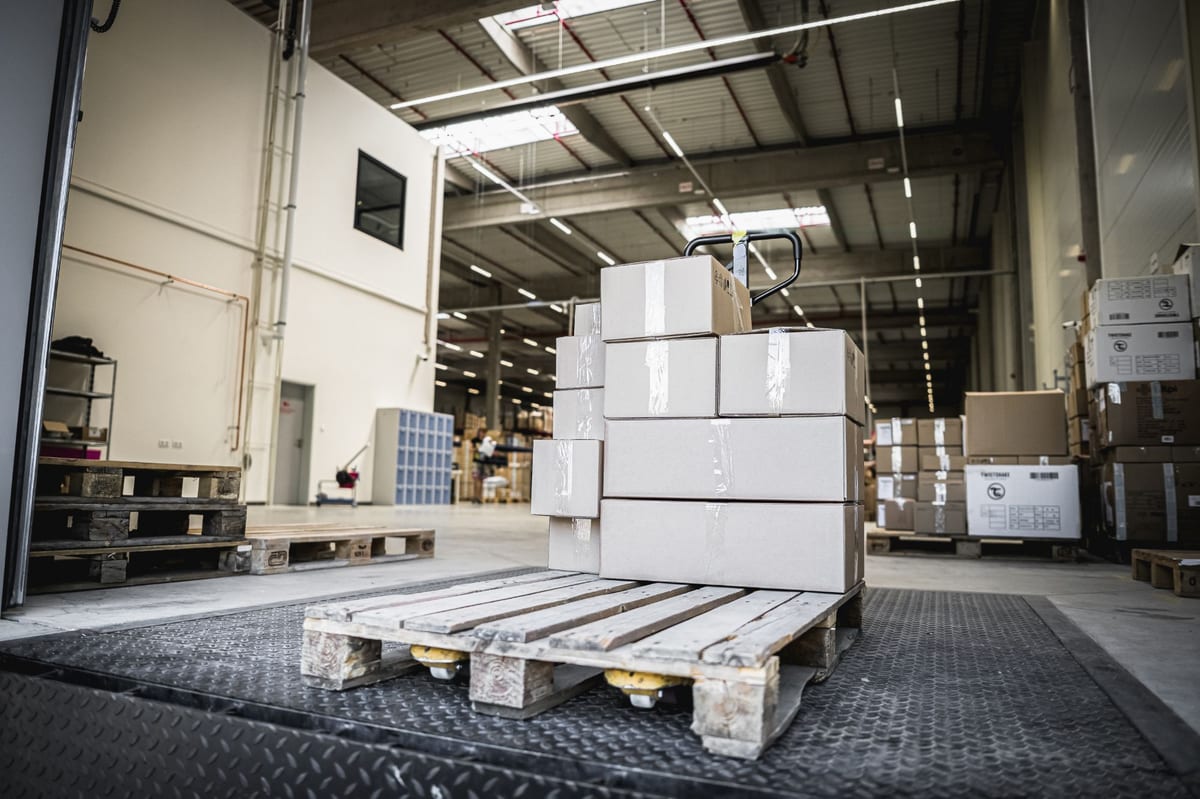
After receipt, the goods may be checked, labeled, sorted by destination or specific orders, and then prepared for shipment. Sometimes this simply involves transferring the goods from one mode of transportation to another; other times, the process also includes splitting or consolidating individual shipments.
The main principle of cross-docking is to move goods as quickly as possible from receiving to shipping without unnecessary interim storage. In this case, the warehouse does not primarily serve as a place for storing inventory, but rather as a transshipment point that ensures a smooth flow of goods between the supplier and the next recipient.
You can also read more about the principles, benefits, and various forms of cross-docking in the following article.
How does cross-docking work in practice?
The foundation of cross-docking lies in the continuity of individual logistics steps and their proper coordination. In order for goods to move on as quickly as possible after receipt, it is necessary to know in advance what will arrive, in what quantity or volume, and where it should be sent next.
The entire process can take several forms, depending on the nature of the goods and the requirements for their further distribution:
- Receiving goods – a shipment from the manufacturer or supplier arrives at the logistics center. The goods are unloaded and recorded.
- Check of goods – this is followed by a check of the quantity and condition of the goods, minor tasks such as updating address labels or other labels, and any other required activities.
- Sorting or kitting (as needed) – if necessary, the goods are sorted by destination or specific orders. Alternatively, multiple shipments may be combined into a single shipment. However, this step is not always necessary.
- Preparation for shipment – the goods are moved to the shipping area of the warehouse and prepared for loading.
- Dispatch – the shipment continues on to its recipient via connecting transportation.
Example:
Let’s imagine that a retail chain needs to restock several of its stores. The supplier delivers the products to a logistics center, where the shipment is sorted by store and prepared for dispatch. If, on the other hand, the entire shipment is intended for a single customer, it can continue on as a single unit without the need for further sorting. We also discuss similar consolidation principles in our article on the B2BC process.
What are the main advantages of cross-docking?
One of the main advantages of cross-docking is that it reduces the time goods spend in a logistics center. Since there is no need to store products in regular warehouse locations and then pick them again, the entire process can be faster and simpler.
Other benefits include:
- Reduced storage space requirements – goods do not need to be stored on shelves for long periods, which helps free up warehouse capacity for products that actually require storage.
- Less handling of goods – by eliminating certain warehouse operations, such as stocking and subsequent picking or packing, the number of handling steps is reduced. Fewer handling steps can also reduce the risk of damage to or loss of goods.
- Potential cost savings – reduced storage space requirements and fewer handling operations can help lower logistics costs.
Cross-docking thus makes it possible to streamline the flow of goods in the supply chain and reduce activities that are not essential for their further distribution. However, for its benefits to truly be realized, the entire process must be well planned and tailored to the nature of the goods being distributed.
When is cross-docking (not) worth it?
Cross-docking can be a highly effective solution, especially when it is possible to plan both the receipt and subsequent shipment of goods effectively. The more accurate the information we have about deliveries – including their quantities and destinations – the easier it is to ensure the smooth flow of goods through the logistics center.
It is suitable, for example, for:
- goods with a known recipient or destination, where it is clear where they are to be sent upon receipt,
- regular and predictable deliveries that make it possible to coordinate the receipt of goods with subsequent transportation,
- fast-moving products for which it is not necessary to maintain a long-term inventory,
- larger shipments intended for further distribution, which can be delivered to the recipient as a whole or after simple sorting.
On the other hand, it may be less suitable for goods that require maintaining sufficient inventory as a reserve – for example, due to fluctuating demand or uncertain supply. It can also be more complicated for products that require more thorough checks, processing, or special storage conditions.
Cross-docking is therefore not a universal substitute for traditional warehousing. Its suitability depends primarily on the nature of the goods, the predictability of deliveries, the requirements for further distribution, and the coordination of individual logistics processes.
Cross-docking and fulfillment: How are they related?
Fulfillment encompasses the entire process of managing an e-commerce store’s logistics – from receiving goods, through storage and inventory management, to order picking, packing, and shipping. Cross-docking can be one of the processes that complement these services.
While in a standard fulfillment process, goods are typically first stored on shelves upon receipt and then picked according to incoming orders, in cross-docking, they proceed directly to the next shipment upon receipt. Both approaches can complement each other effectively. Part of the product range can be stored long-term, while other shipments may simply pass through the logistics center. Furthermore, individual processes can be tailored to specific client requirements.
At Skladon, we also offer cross-docking to our clients as part of our logistics services. If you’re interested in how this distribution method could work for your business, please contact us. We’d be happy to discuss the possibilities for collaboration with you.